

Severance is a weirdly beautiful show about the separation of our “work brain” from our “non-work brain”. I’ve seen both seasons on AppleTV+ and I really still don’t have much of an idea of what’s going on. But that hasn’t stunted my enjoyment of the show. It’s the characters and brilliant acting that’s the real draw. From people you might know like Adam Scott, Patricia Arquette and Christopher Walken to relative newcomers Britt Lower, Tramell Tillman and Zach Cherry — everyone shines in this show.

You should watch it.
This blog is about CliftonStrengths. But faithful readers know it’s also kind of a front for my TV and movie recommendations as well. And since this is blog #34 out of the 34 talents, it may be the last recommendation I give on this blog — until I find a new angle for future entries!
So today we’re going to talk about the talent of Includer, and how it can benefit a team.
We’re also going to talk about the character Irving B. from Severance as a compelling example of what Includer looks like when used well, even in the cold, fluorescent-lit world of Lumon Industries.
Hopefully by the end, I’ll clarify your understanding of Includer and give you a new show to watch.
Include me

People with Includer high in their CliftonStrengths profile naturally notice who’s being left out and they do something about it.
They’re driven to widen the circle and make sure every voice has a chance to be heard. Their radar is finely tuned to exclusion, and they feel a responsibility to correct it.
That brings me to Irving Bailiff., portrayed with precision in Severance by John Turturro. Irving B. (all of the characters are only referred by their last initial in the show) is an employee in a boring, task-based office setting who compared to his coworkers is older, meticulous and a rules-driven data entry specialist. The kind of person in a corporate office that just does what they’re told and makes no waves.
But underneath the surface is a man who cares deeply about connection with others and dignity of each member of the team, no matter their role or rank in the hierarchy.
He sees when people are being marginalized or overlooked and then makes deliberate choices to include them.
No spoilers, I promise
I’ll keep this vague if you haven’t seen the show. One of the most touching storylines in Severance involves Irving’s outreach to other characters at Lumon.
Irving goes out of his way to listen to others and learn their stories, even when crossing departmental lines in the office they work in is taboo.
It’s about inclusion. Irving notices the absurdity of boundaries that prevent human connection and does his part to gently blur them.
This is what people with Includer talent do so well. They see the lonely coworker at lunch, the person whose ideas are always talked over or the new team member who hasn’t found their footing yet. Then they make a conscious effort to reach out to them. Sometimes it’s formal and sometimes it’s not. Often, they make outreach because it’s this powerful force that they feel without realizing why. It’s their default, and that’s a good thing. They don’t do it out of pity or because they were taught good manners, they feel an instinctive drive to make other people feel valued.
Creating a culture of belonging
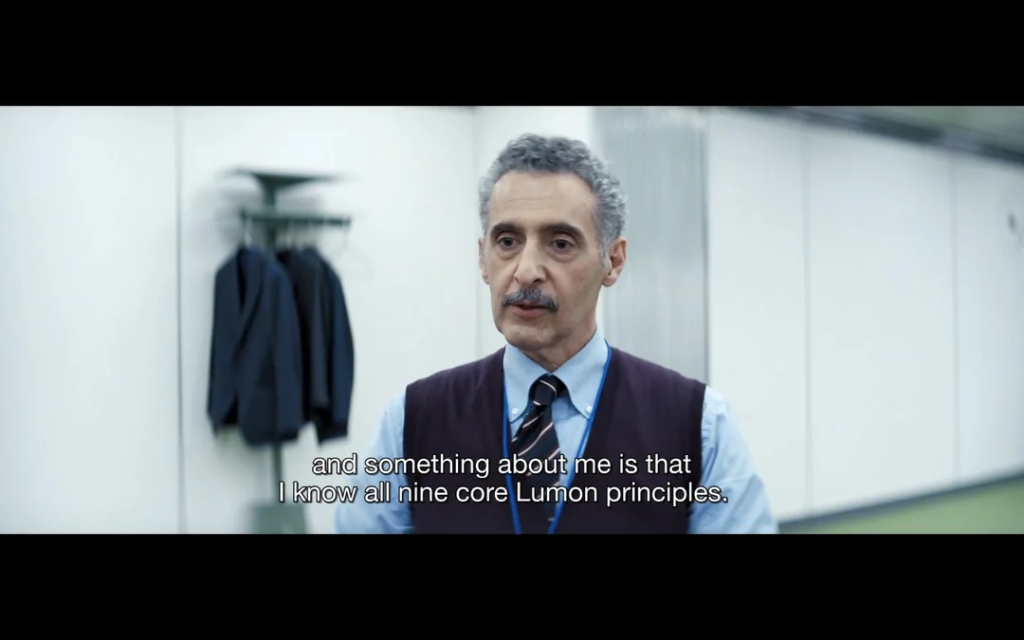
Without saying too much, my Irving B. analogy certainly isn’t perfect throughout the arc of the show so far. A lot of stuff goes down, and like I said — I have no idea where it’s going next.
But outside of the drama that drives any TV show, where Irving as Includer fits is that he simply reaches out, one person at a time. And in doing so, he models what a more inclusive workplace could look like.
Imagine a real-world office with lots of people with Includer talent. People who look around the meeting room and make sure every voice is invited to the table.
Imagine project leads who ask, “Who haven’t we heard from yet?” or “Is there someone else we should bring into this conversation?”
That’s how the Includer talent changes culture. Not through slogans or mandates, pizza parties or (if you’ve seen Severance already) waffle parties. Real inclusion is done through small, repeated acts of intentional welcoming of others and sustained leadership by those who it comes easy for — those with Includer talent.
The Lesson from Irving B.
As of this writing, Severance is just two seasons in. I may have to revisit this blog if Irving B. tuns out to be something else that I’ve misjudged. That’s a problem for a pop culture based subject when we don’t know how the story ends.
Speaking of how the story ends, it’s fitting that I saved blog #34 for my own person #34 talent. We all have something that ranks at #34, and mine is Includer. Like most people, I had a bit of a hard time when I learned that. Inclusion as a general principle is so important to me and has been key to my work over the years when it comes to representation on teams. Fortunately, I don’t think that’s what is at play here. That ethos doesn’t have much to do with my talents, but more about my values.
But the more I understood the definition of Includer, I could see how bringing others into my processes is not something that is my natural instinct. If I’m assigned a project, my first instinct is to go at it alone.
Early in my career, I was never much of a meetings person. Instead of calling everyone together to get input, I’d take everything on just to make everyone else’s life easier. I thought I was doing them a favor, until I later realized I was doing them a disservice. How could someone learn from me if I don’t share my process?
That’s the thing about the talents at the bottom of our list. We have those talents, but we have to work super hard to manage them. If there’s a holiday party or an office celebration, I know I need to work with an Includer on my team to help me organize it.
I know I have to let everyone know that if I’m moving forward too quickly, then “it’s not you, it’s me”. I’ll never be great at bringing everyone in on what I’m thinking or planning, and that’s ok.
If you have Includer in your Top 5 or Top 10, consider how you can channel that gift more intentionally at work or in life. How can you support people like me, who don’t have your natural tendency. Let your leadership know that bringing people in and together comes easy to you, and volunteer that energy for the benefit of the team.
Keep scanning the room. Keep pulling up extra chairs. Keep asking who’s missing and keep inviting them in.
Because like Irving B. shows us, inclusion doesn’t have to be loud to be powerful.
Leave a Reply
You must be logged in to post a comment.